
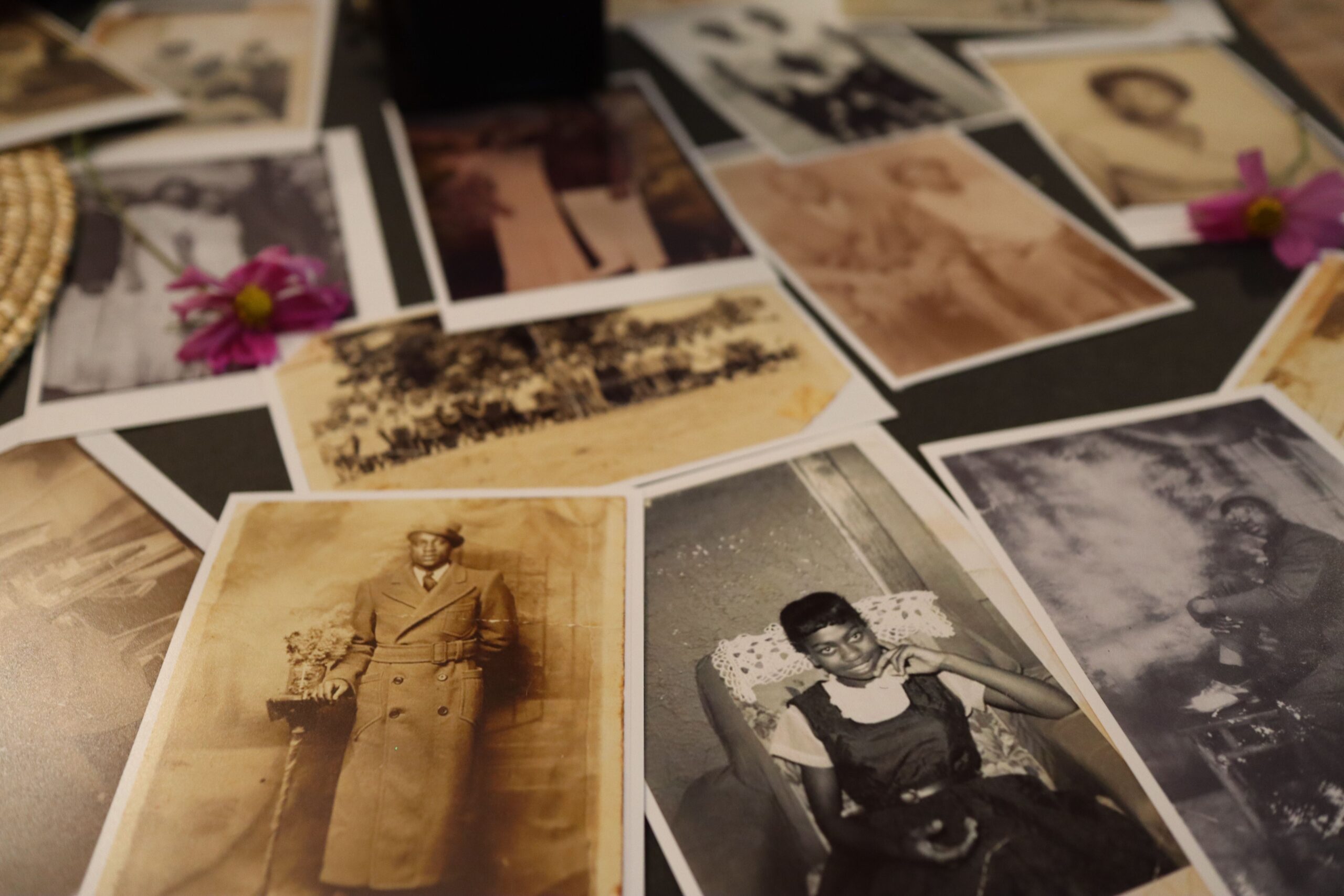
A family photograph may be familiar even when its date or location is not. Organizing the story behind an image does not require filling every blank. A useful photo note distinguishes what someone remembers, what a label actually says, and what remains unknown.
Start with a small group of photographs the owner wants to discuss. This is a family-history organization project, not a memory test. A person can skip an image, decline a question, or choose not to share a story.
Choose one manageable collection
Select a handful of images from one event, album, or folder. Keep their existing order while you work. Give each image a simple reference, such as “Album-A-01,” so notes can be matched to the right photograph without changing or marking the original.
For digital images, keep the originals separate from any edited working copies. The Library of Congress’s personal photo-archiving guide recommends descriptive filenames, information about people and subjects, organized folders, and copies in different locations. The note-taking method below adds an original way to record the source and confidence of family descriptions.
Ask open questions instead of suggesting answers
Try “What would you like someone to know about this picture?” or “Do you recognize the place?” Avoid leading questions that supply a name or year before the person answers. Let the person decide how much detail to contribute.
If several relatives remember different details, preserve both accounts with their sources. There is no need to settle a disagreement during the conversation. A caption can say “Location not confirmed” until the family has better evidence.
Keep a photo note with six fields
- Image reference: the identifier matched to the file or album position.
- Description: what is visibly shown.
- Names and place: confirmed details or clearly labeled possibilities.
- Date: exact, approximate, or unknown.
- Information source: who supplied the description or which existing label supports it.
- Sharing preference: who the owner wants to receive this version.
Fictional example: Album-A-01; three relatives beside a picnic table; location unconfirmed; “possibly late 1980s,” recalled by a family member on [date]; private family copy only. This preserves the useful recollection without turning an estimate into a fact.
Separate a caption from a longer story
Keep the image caption short enough to identify the scene. Put a longer recollection in a companion note using the same reference. Mark quotations as quotations only when you have captured the words accurately and the person agrees to that use; otherwise label your account a summary.
Do not add sensitive details about someone else just because a photograph prompted them. Ask before recording audio, copying a private album, or distributing an image. Permission to look at photographs is not permission to publish them.
Check the finished collection with its owner
Open one photograph and its matching note. Can the owner recognize which information is confirmed and which is tentative? Correct name spellings and remove any details they do not want included. Keep unanswered questions as questions rather than replacing them with a plausible story.
When sending a permitted family copy, include the matching notes so filenames alone do not carry the whole explanation. Check that the selected files open and that the originals remain unchanged. For relatives coordinating from different places, our long-distance family support resource offers wider organizational context.
Valiynt Health Group is preparing to offer Personal Assistance Services in Texas. Its HCSSA license is pending. Services are not available, and Valiynt is not accepting clients.